Most engagement programs try to push people into caring. Self-Determination Theory (SDT) flips that: it helps you design conditions where motivation shows up on its own. At its core are three human needs—Autonomy, Competence, and Relatedness—that, when met, turn effort into energy and compliance into commitment.
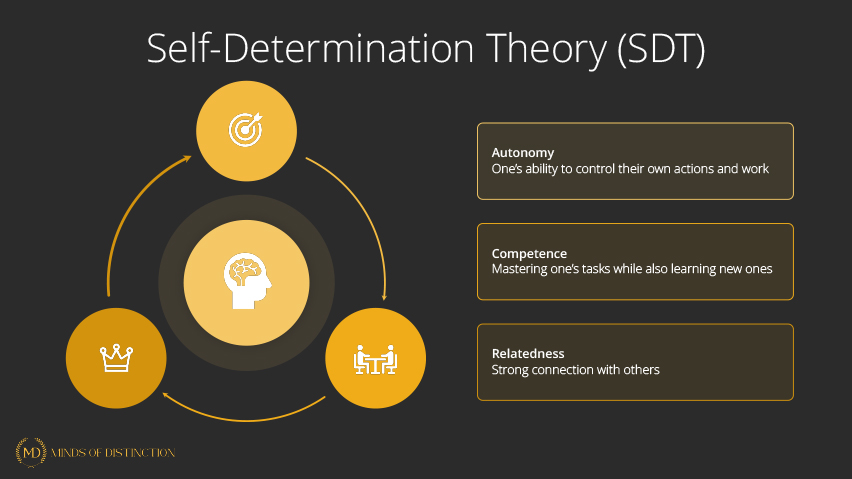
According to the SDT model,
Autonomy is having meaningful control over one’s actions and work.
Competence is mastering current tasks while learning new ones.
Relatedness is feeling strong connection with others.
Why SDT Matters at Work
When people experience choice, progress, and belonging, they don’t need micromanagement or motivational gimmicks. They need clear problems to solve and room to solve them. SDT gives leaders a simple checklist for building that environment.
A Leader’s Playbook (Do These Weekly)
1) Autonomy: Create choice within clear guardrails
Define the “what,” delegate the “how.” Share outcomes, constraints, and deadlines—let the team choose tools and approach.
Decision rights map. Make it explicit: who decides, who’s consulted, who’s informed.
Two-way planning. Set goals top-down, design the plan bottom-up.
Result: People feel ownership, not oversight.
2) Competence: Turn work into a training ground
Progress beats perfection. Ship smaller increments; hold short retros focused on what we learned.
Stretch with safety. Pair “first-time” owners with a coach; pre-approve a small mistake budget.
Feedback you can use. Replace vague praise with specific behavior → observable impact → next rep.
Result: Confidence rises because skills are compounding.
3) Relatedness: Build connective tissue, not just calendars
Rituals that reveal the human. Start meetings with a quick “win, block, or thanks.”
Win – something that went well since the last meeting.
Block – something slowing them down that may need help.
Thanks – a shout-out to someone for a helpful action.
Why do it?
Builds momentum and trust (quick positives + visible appreciation).
Surfaces risks early (blocks) without a long status tour.
Keeps the meeting focused on what matters now.
How to run (5 minutes total)
Facilitator: “One per person: win, block, or thanks—15 seconds each.”
Popcorn or go down the participant list.
Capture blocks in a shared doc with an owner + next step (solve after the meeting).
Move on to the agenda.
Buddy system. New hires get a peer buddy and a cross-team intro tour.
Show the impact. Monthly discussions with real stakeholders to connect effort to people’s actions.
30–60–90 Rollout
Days 0–30: Publish decision-rights map; pilot bottom-up plans on one project; start weekly retros.
Days 31–60: Launch buddy program; schedule monthly customer demos; assign one scoped stretch project per person.
Days 61–90: Standardize feedback norms; review outcomes vs. constraints; scale what worked.
The SDT Pulse Check (Monthly, 3 Questions)
Autonomy: “I had meaningful choices in how I did my work.”
Competence: “I made visible progress and learned something new.”
Relatedness: “I felt connected to my team and the people we serve.”
Use a 1–10 scale, discuss trends, and choose one improvement per area.
Closing Thought
Motivation isn’t a mystery—it’s a design problem. When you give people choice, growth, and connection, performance follows. Start with one team, one practice per pillar, and let the results speak louder than any slogan.